How to Spot a Fake Free Credit Link Page Before You Enter Your Phone Number
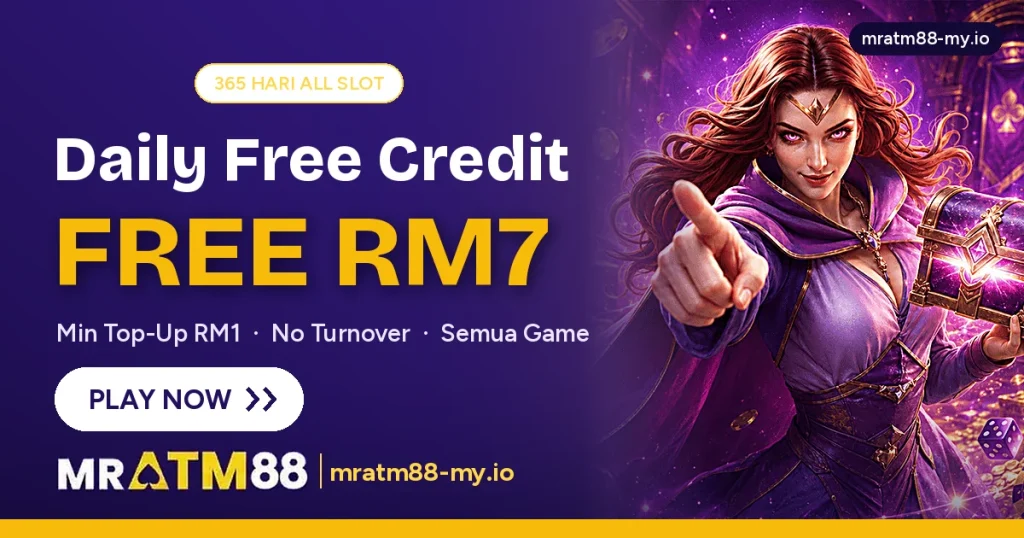
A promotional banner claiming instant credit has been circulating across community group chats this week, and at a glance it looks exactly like the real thing: same colors, same logo, same familiar layout. Copying that appearance takes an afternoon and free design software, which is exactly why appearance alone can never be the test you rely on before typing a phone number anywhere.
Every week, many Malaysian players search for an authentic link free credit offer to test new games without financial exposure. Malicious syndicates know this behavior well. They construct deceitful portals that mimic reputable gaming brands down to the smallest detail. Their objective is not to deliver game credits, but to collect your phone number, your identity details, and your banking access codes. A counterfeit free credit link exists solely for data theft, credential harvesting, and identity fraud.
Approaching every unsolicited free credit no deposit offer with caution is your first line of defense. Scammers depend on excitement and haste, hoping you will rush through registration before noticing visual defects, mismatched web addresses, or strange redirection patterns. Verifying a promotional link takes less than half a minute once you know the exact warning signs, starting with confirming you are on the real mratm88 login page rather than a copycat.
What Makes a Free Credit Link Page Look Real?
Fraudulent landing pages succeed because their operators do not invent visual themes from scratch. Instead, they copy genuine local gaming portals. When you arrive on one of these portals, you see familiar color schemes, official partner logos, and conventional button placements. This visual familiarity lowers your guard, leading you to believe you are on a trusted brand portal.
Branding that is copied pixel for pixel
Modern copycat page operators use automated web scrapers to steal whole styling packages directly from authentic local platforms. They duplicate high-resolution promotional banners, mascot illustrations, and software provider icons so the fake portal mirrors the real portal completely. When you land on the page, the header displays promotional announcements featuring a link free kredit deal that looks identical to genuine campaign materials, unlike the real mratm88 page.
These duplicate sites also copy visual typography, floating badges, and fake live withdrawal feeds. The floating badges display fabricated transaction alerts claiming that recent members successfully cashed out their rewards. These tickers run on simple looping scripts that do not connect to any genuine payout rail or backend database. Because the visual facade appears flawless, visitors mistakenly assume that the operational backend must be safe. Modern web technology makes visual duplication simple, making visual polish an unreliable indicator of safety.
A domain that is one character off
While clone developers can copy visual assets with precision, they cannot purchase a web address that already belongs to an authentic operator. To bypass this obstacle, they construct a spoofed domain. This strategy involves registering an address that resembles the real brand URL, relying on subtle typographic tricks that a hurried user will miss on a mobile screen.
Scammers rely on typosquatting, such as swapping the lowercase letter l with a numeral one, substituting the letter o with a numeric zero, or adding prefixes like official or secure. Alternatively, they direct players through generic aggregator hubs and directories such as joylink, joy.link, heylink, suka2cuci, 100cuci, 12cuci, or mamak24. These aggregator hubs route traffic across disposable subdomains. If the official brand URL ends in a common extension, the clone portal might switch to an obscure suffix. When evaluating promotional destinations, an unexpected hyphen or a misplaced letter in the address bar confirms an active phishing trap, confirmed on the real mratm88 login entry point, not a copycat.
| Verification Area | Legitimate Domain Traits | Spoofed Domain Warning Signs |
|---|---|---|
| Domain Spelling | Matches official brand spelling exactly | Contains character swaps, repeated consonants, or added digits |
| Domain Extension | Uses established official regional extensions | Swaps to obscure cheap extensions or unverified third-party hostnames |
| Aggregator Funnels | Hosts promotional forms directly on the verified official domain | Uses third-party bridge pages like heylink or joylink to bounce visitors |
Is the Redirect Chain Hiding the Real Destination?
When an unfamiliar promotional message arrives in your messaging application, the link displayed in the message preview is rarely the server that ultimately collects your information. Deceptive marketing campaigns depend on intermediate routing layers to conceal their infrastructure from automated security scanners, platform moderators, and threat databases. Knowing how these redirection layers operate lets you spot malicious traffic before your browser reaches the final harvesting form.
Shorteners that hop more than once
A deceptive campaign rarely sends you directly to its final destination. Instead, it routes your initial click through an intentional redirect chain made of multiple URL shorteners and intermediate tracking scripts. When you tap the promotional link, your browser rapidly passes through several transitional web addresses within a fraction of a second.
These transitional hops serve a clear tactical function for malicious operators. Security algorithms monitor messaging networks to detect and block malicious links. To bypass this automated filtering, operators direct your browser through benign shorteners or compromised intermediate web addresses. Each hop inspects your connection, verifying that your device matches the profile of an actual mobile user rather than an automated cybersecurity scanner. If the traffic passes these checks, the intermediate script forwards your browser to the active harvesting page. If you notice your mobile address bar flashing through multiple distinct domain names after a single tap, the link is actively attempting to evade surveillance, behavior never seen on the genuine mratm88 slot page.
Why a final URL matters more than the first click
The initial web address displayed in a chat message carries zero diagnostic value when determining legitimacy. The only address that matters is the final landing URL shown in your browser address bar once all redirection activity has completely finished.
A scammer can paste an official label over a chat link, but they cannot hide the final host address once the landing page finishes loading. Before interacting with any form fields, examine the resting address carefully. Check the primary domain against verified community lists. Threat analysts frequently place malicious landing hosts on a public blacklist shortly after discovery. Because these landing nodes face rapid takedowns, rogue networks continuously rotate resting domains. A final landing address displaying an incoherent string of numbers or random subdomains indicates operators burning through disposable infrastructure to evade automated domain bans.
| Routing Step | Authentic Direct Flow | Deceptive Multi-Hop Chain |
|---|---|---|
| Initial Click | Leads directly to the brand domain or an official regional mirror | Passes through public shorteners or private intermediate scripts |
| Browser Activity | Resolves the target page cleanly in a single request cycle | Flashes multiple changing domain names across the address bar |
| Destination Server | Settles on a stable, verified portal with established history | Lands on disposable hostnames designed to evade domain blacklists |
Does the Padlock Actually Prove Anything?
For years, internet users were told that a small padlock icon in the browser address bar meant a website was safe to use. Many Malaysian players still rely on this outdated rule when evaluating unfamiliar promotions. This assumption is dangerous. Relying solely on the presence of a security icon will lead you directly into the hands of modern phishing syndicates who understand browser security standards just as well as legitimate web engineers, a threshold set on the free credit no deposit new member page.
What a certificate confirms and what it does not
The padlock icon confirms that your browser has established an encrypted connection with the remote server using a valid digital certificate. It confirms that the data traveling between your device and that server cannot be intercepted or read by an unauthorized third party monitoring your local wireless connection.
That encryption guarantees transit privacy, but it guarantees nothing about who operates the receiving server. An active certificate does not perform background checks or operational auditing. It does not verify whether the portal owner is an authentic gaming provider or a data harvesting syndicate. When you enter personal credentials into an encrypted phishing portal, your data travels securely across the web directly into the database of the attacker. The padlock merely confirms that nobody intercepted your credentials while you handed them over.
Certificates on copycat pages
Securing a digital security certificate used to require extensive corporate verification, administrative fees, and extensive documentation. That era ended years ago. Today, automated certificate authorities issue domain-validated certificates to any webmaster within seconds, completely free of charge, with no manual review involved, a case study inside the free credit no deposit writeup.
Because these automated certificates require only basic domain control confirmation, creators of an illegitimate copycat page generate authentic encryption credentials immediately after registering a fraudulent domain. They configure the certificate during server setup so that modern mobile browsers display the familiar secure padlock icon. Scammers actively rely on this visual cue to create a false sense of legitimacy. When a prospective player spots the solid padlock, their natural hesitation evaporates, making them far more willing to type sensitive phone numbers and private details into a fraudulent input box. Never equate encrypted transmission with operator integrity.
What Should a Legitimate Registration Flow Ask For?
Understanding what a standard onboarding process requires is the most dependable way to spot an illegitimate promotional campaign. Genuine gaming portals maintain consistent, straightforward registration procedures. They collect only the necessary baseline identifiers required to set up your profile and configure your player wallet. In stark contrast, rogue data harvesters construct bloated forms specifically designed to capture critical financial and personal assets.
Fields a real form needs
An authentic registration portal requires only basic operational details to open an account. In a standard setup, you choose a username, create a password, and provide a local mobile phone number for SMS verification. When you collect winnings through an official payout rail, the platform requests standard banking details, specifically your bank account number and account holder name, to facilitate account settlement, a warning sign mapped out in the free credit no deposit writeup.
Legitimate promotional rewards also operate under transparent, pre-defined operational boundaries. For instance, authentic introductory campaigns feature strict and clearly defined execution limits rather than open-ended promises. Under the official NEW REGISTER FREE (ALLSLOT) campaign, referenced on the current free credit no deposit new member page, eligible new members receive a reward RM5 allocation with no turnover and no rollover constraints, restricted to a claim limit x1 per profile. When players choose to cuci their eligible balances from this promotional credit, the system enforces a minimum cuci RM100 and a maximum cuci RM50 (5%), restricted exclusively to eligible slot games across the catalog.
Furthermore, legitimate platforms enforce clear promotional integrity rules across all account actions. A central foundational standard across all legitimate campaigns is the universal restriction: Deposit, Free Kredit, Rebate Dan Komisen Tidak Boleh Digabungkan. Under this binding operational policy, deposit funds, promotional free kredit balances, rebate points, and affiliate commission earnings cannot be combined within a single active wager cycle. Any deliberate attempt to stack conflicting promotional incentives violates administrative terms and results in the immediate forfeiture of all accumulated points and promotional credits.
For structural illustration, consider this scenario: Worked example, figures assumed for illustration: a RM100 deposit with a x2 rollover requirement demands RM200 in total wagering volume across qualifying titles before settlement clearance is approved.
Legitimate operators define these precise parameters openly because their business model depends on clear, consistent accounting rather than tricking applicants into surrendering unrelated banking access codes.
Fields only a phishing form asks for
A deceptive phishing form does not restrict itself to standard username creation. Its primary objective is harvesting actionable personal data that enables direct financial theft or unauthorized account access. When evaluating an unfamiliar page, look closely at the secondary questions embedded within the onboarding form.
A fraudulent form frequently asks for sensitive financial data that no authentic gaming portal ever requires during preliminary sign-up. These warning prompts include requests for your personal ATM PIN, online banking login usernames, primary banking passwords, answers to confidential security questions, or images of your national identification card before your account is even created. Most dangerously, rogue forms may prompt you to enter a transaction authorization code or a one-time banking passkey directly into their form, pretending it is needed to verify your promotional eligibility. Transparencyreport.google.com lets you check a suspicious link’s safety status.
No authentic platform needs your personal banking password to process a promotional bonus or credit allocation. Legitimate portals only require your bank account number when you choose to withdraw funds to your verified account. Any web page asking for payment portal credentials, confidential passkeys, or identification scans to claim a complimentary promotional reward is a credential harvesting operation.
| Data Field Requested | Standard Authentic Portal | Rogue Phishing Portal |
|---|---|---|
| Username and Account Password | Required for profile access and platform security | Often asks to reuse primary personal email passwords |
| Mobile Phone Number | Required strictly for SMS verification codes | Harvested for identity tracking and targeted telemarketing |
| Bank Account and Holder Name | Required only during profile setup or withdrawal setup | Demands direct online banking portal login credentials |
| Online Banking Passwords and PINs | Never requested under any operating circumstances | Directly requested to compromise personal bank accounts |
| Bank TAC and OTP Passcodes | Never entered on third-party gaming web forms | Intercepted to authorize fraudulent fund transfers |
What Happens if a Phone Number Was Already Typed In?
If you realize that you entered your mobile phone number on a suspicious landing page, do not panic. Acting decisively within minutes significantly reduces the risk of identity theft, unauthorized account takeovers, and fraudulent financial charges. The moments immediately following an accidental submission determine whether a security scare turns into an actual financial compromise.
Immediate steps
The first rule after entering your phone number is to stop immediately. Close the browser tab and do not fill in any secondary verification fields. If the rogue page prompts you to enter an SMS confirmation code that just arrived on your device, do not type it in. That incoming code is likely an authorization code triggered by an attacker attempting to access one of your existing online accounts.
Next, document the incident thoroughly. Take a clear screenshot of the suspicious web address, the landing form, and any unsolicited text messages you received. If you suspect an existing gaming account or digital wallet was targeted, open a formal support ticket with the genuine service provider immediately. Submitting this documentation allows security personnel to check your account status, flag suspicious login attempts, and protect your profile from unauthorized balance adjustments.
What to change first
Once you have isolated the immediate risk, begin securing your primary accounts. If the password you entered on the fake page matches the password you use for your email, your banking portal, or your social accounts, change those passwords immediately. Prioritize your primary email account, because access to your inbox allows an attacker to reset credentials across all your secondary services.
After securing your email, review your financial applications. Enable biometric verification across every service. If you entered banking details on the fraudulent form, call your bank immediately before their daily cut-off time for settlement operations. Inform their fraud division that your details were exposed, and request a temporary block on outgoing wire transfers and debit authorizations. Finally, review payout rail settings on verified gaming portals to confirm that your registered bank account has not been modified.
Quick Answers
Is a padlock icon enough to trust a page?
No. A padlock icon only proves that your connection to the server is encrypted. It does not verify the identity, legitimacy, or intentions of the person who owns the website. Fraudulent copycat operators can obtain free digital certificates in minutes to display a padlock icon on their fake registration forms.
Can a link free credit slot page be safe if it looks new?
A newly launched promotional page can be safe only if its domain matches the official brand address verified through primary company channels. If an unfamiliar link free credit slot landing page promotes a tanpa deposit campaign with vague terms and an unrecognized domain, treat it as dangerous. Genuine brands display clear rules and let you cuci your earnings through standard banking rails without demanding private passwords.
What is the fastest way to check a redirect chain?
The fastest method is to inspect the final URL in your address bar once loading finishes, rather than trusting the initial link text. You can also paste the link into a reputable online redirect tracker tool to reveal every intermediate domain hop before opening the page on your mobile device.
Who should a suspicious link be reported to?
You should report the link directly to the official customer support team of the brand being impersonated so they can issue community warnings. Additionally, report the malicious address to the messaging platform where you received it and submit the URL to Malaysia’s MCMC‘s public antiphishing registry to accelerate domain takedowns.
